And so finally the last play. The Mercers' Judgment Day wagon is the largest of all, three levels painted with heaven above and hell below, with a great golden throne in the center where Christ sits in judgment. When the wagon rolled into place, the crowd fell silent. This was it. The end of all things.
The play began with the dead rising from their graves, actors popping up through trap doors wrapped in grave clothes, looking bewildered. Then the angels appeared, separating the blessed ...
Blog Posts
Judgment Day – The Mercers' Masterpiece
4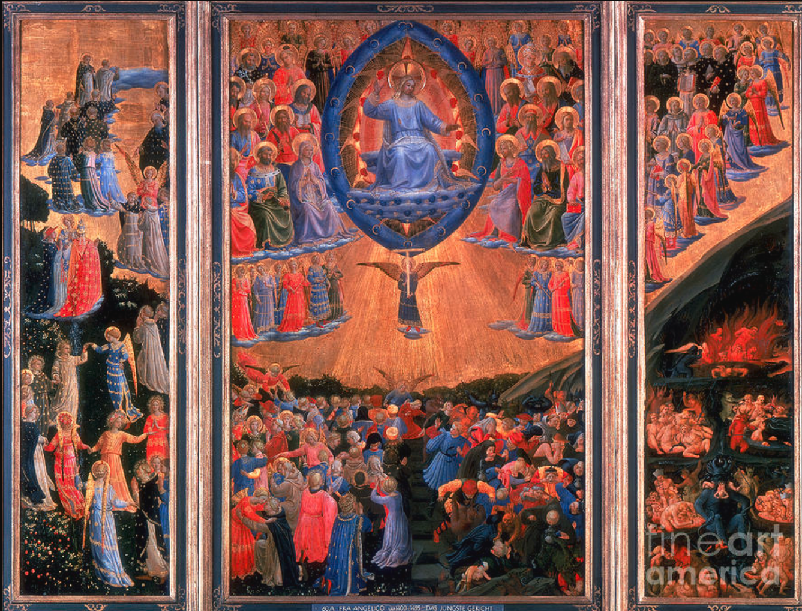
The Mercers' Judgment – Come, Ye Blessed – A medieval Last Judgment scene with Christ enthroned, the blessed ascending, and the damned descending.
Connections to Course Materials
This post brings together all the course sources. The Mercers performing Judgment Day follows the guild assignment pattern from "Get Outside and Have a Mystery Play." The three level wagon with heaven above and hell below reflects the vertical staging mentioned in Professor Mello's lecture title "Wagons, Stairs, and Naves." The trap doors for the dead rising connect to the video's discussion of special effects. The reference to Hrotsvitha of Gandersheim comes from Crash Course #9, which introduced her as the first known female playwright of the post classical era. The desire to be like Rose, the invisible stage manager from A Play of Isaac, connects to the novel's theme of unseen labor. Brother John's final comment ties back to the Quem Quaeritis origin from Crash Course #8, completing the circle from liturgical drama to civic spectacle. The post fulfills the assignment requirement to include information from all the videos and the novel excerpt while imagining the experience of being there.
The Harrowing of Hell – The Saddlers' Surprise
4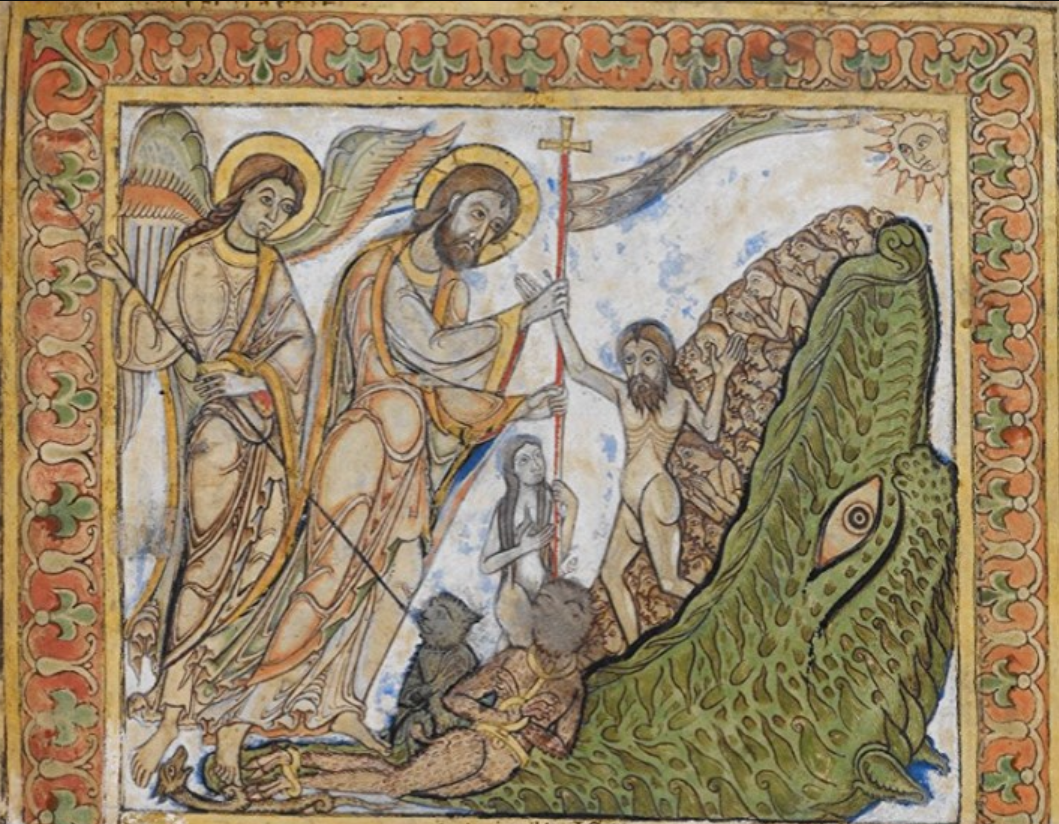
Christ Victorious – The Saddlers' Gold-Clad Savior – A medieval depiction of the Harrowing of Hell with Christ on broken gates reaching for Adam and Eve.
After the darkness of the Crucifixion, we needed something. And the Saddlers provided it with their Harrowing of Hell play.
This is the moment between the Crucifixion and the Resurrection, when Christ descends into hell to free the righteous who died before him. It is strange and wonderful and surprisingly joyful.
The hell mouth was magnificent, a great painted head with jaws that opened and closed, smoke pouring from its nostrils. Inside you could glimpse devils, the Saddlers' appren...
This is the moment between the Crucifixion and the Resurrection, when Christ descends into hell to free the righteous who died before him. It is strange and wonderful and surprisingly joyful.
The hell mouth was magnificent, a great painted head with jaws that opened and closed, smoke pouring from its nostrils. Inside you could glimpse devils, the Saddlers' appren...
Connections to Course Materials
This post references the Crash Course video's discussion of the hell mouth as a popular feature of medieval drama. The video notes that the hell mouth was a favorite element that audiences loved, and this post explains why, describing how it combines terror with entertainment. The non biblical nature of the Harrowing of Hell story connects to the video's point that plays sometimes drew from apocryphal sources and expanded beyond strict scripture. The joyful crowd response demonstrates the video's observation that these plays mixed comedy, drama, and scripture, providing emotional variety. The theological point about needing to see Christ victorious after the Crucifixion reflects the plays' purpose of presenting the complete Christian narrative from Creation to Judgment. Brother John's comment about God's mercy connects to the theological significance.
Corpus Christi Eve – The City Transforms
4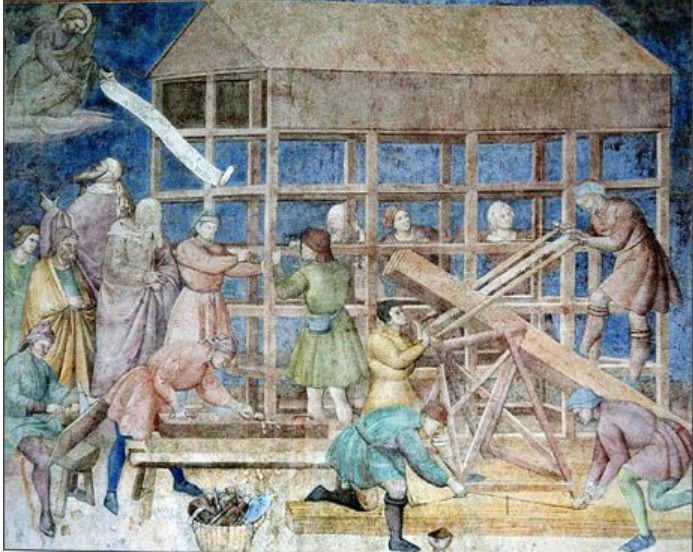
The Shipwrights' Ark – Almost Ready to Float (on Wheels) – A medieval manuscript illumination depicting craftsmen building a boat on wheels, surrounded by onlookers.
The city has gone mad. In the best way.
All week, wagons have been rumbling through the streets, great painted things with wheels as tall as my waist. The guildsmen are putting final touches on their pageants, and you can smell paint and glue and sawdust everywhere. The shipwrights' wagon for Noah's Flood is so large it nearly got stuck turning onto Coney Street yesterday. Thomas was there and said a crowd of twenty men had to push it free.
Mother is exasperated because the stree...
All week, wagons have been rumbling through the streets, great painted things with wheels as tall as my waist. The guildsmen are putting final touches on their pageants, and you can smell paint and glue and sawdust everywhere. The shipwrights' wagon for Noah's Flood is so large it nearly got stuck turning onto Coney Street yesterday. Thomas was there and said a crowd of twenty men had to push it free.
Mother is exasperated because the stree...
Connections to Course Materials
This post draws directly from the Crash Course video "Get Outside and Have a Mystery Play," which explains that each guild was responsible for staging a biblical story related to their trade. The shipwrights building the ark demonstrates this connection perfectly. The video also notes that guilds would supply costumes, actors, and sets, piling everything onto pageant wagons that were trundled through town. The reference to Alice's father potentially forgetting his lines connects to the video's point that amateur actors could be fined for forgetting lines, showing how seriously these performances were taken despite their amateur status. The atmosphere of civic transformation and pride reflects what Professor Mello described in her lecture about theater becoming a way for communities to express their identity and culture during festivals.
Following the Wagons – A Ramble Between Plays
4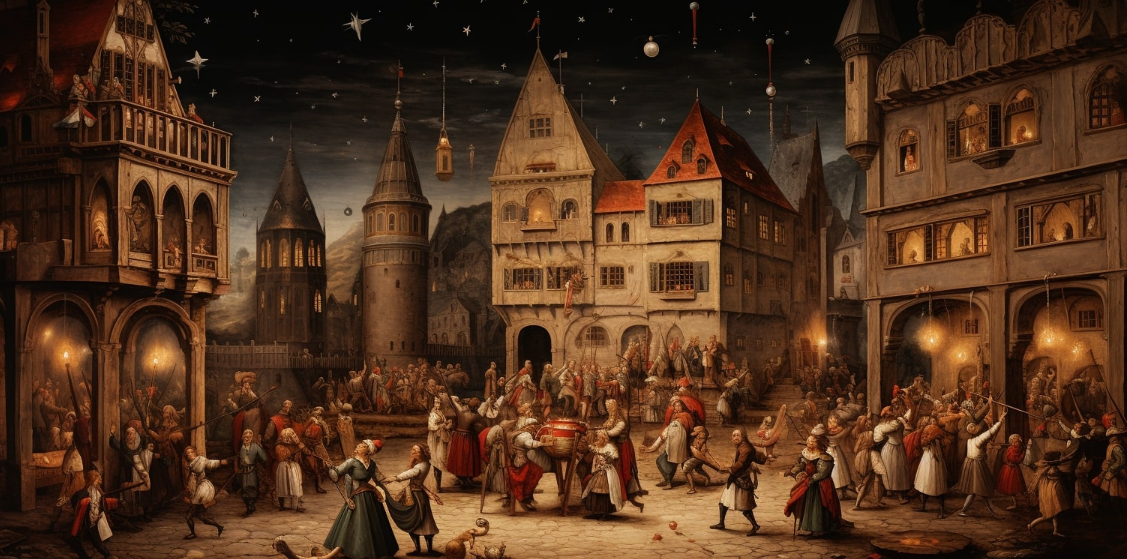
By Torchlight – The City After Dark – A medieval illustration of a night festival with torches, crowds, and food sellers.
We are exhausted. I can barely feel my feet. But we cannot stop. There is still the Resurrection and the Ascension and finally the Last Judgment at the Mercers' wagon. So we walk and walk and walk.
The streets are a river of people, torches bobbing, voices rising and falling. We pass the Cooks' wagon, the Second Accusation before Pilate, and catch a glimpse of Judas looking suitably miserable. A man near us offers commentary on the theology of Judas's damnation until his wife t...
The streets are a river of people, torches bobbing, voices rising and falling. We pass the Cooks' wagon, the Second Accusation before Pilate, and catch a glimpse of Judas looking suitably miserable. A man near us offers commentary on the theology of Judas's damnation until his wife t...
Connections to Course Materials
This post directly references Professor Mello's lecture on "Wagons, Stairs, and Naves," specifically her point about theater in the medieval period being a way for communities to explore identity, ethics, spirituality, and culture during festivals. The observation that people from all social levels mix equally in the crowd reflects her discussion of how theater became popularized and accessible to the everyday person. The logistics of following the wagons from station to station connects to the Crash Course video's description of how audiences would move through the city to watch multiple plays. The exhausted but exhilarated feeling captures the immersive nature of the festival experience. Brother John's comment about the prior scolding him but God understanding reflects the tension between official religious observance and popular celebration that Professor Mello discussed.
The Crucifixion – The Butchers' Play
4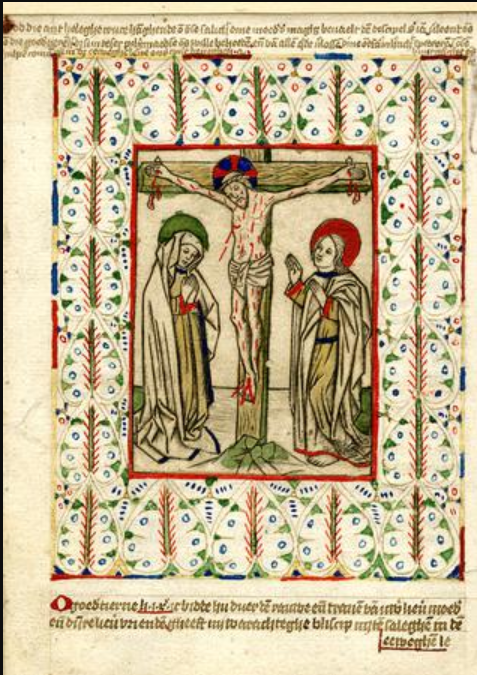
The Butchers' Christ – Suffering Made Real – A medieval crucifixion scene with darkened sky and mourners at the cross.
This is the one everyone dreads and everyone watches.
The Butchers do the Crucifixion. They handle blood and death in their daily work, so they are the obvious choice, and they do not hold back.
The wagon was draped in black. Christ carried his cross, a real timber heavy looking. The soldiers, butchers' apprentices and big lads, were rough with him, pushing, jeering. The crowd fell silent, the kind of silence that is louder than noise.
When they nailed him to the cross, not real na...
The Butchers do the Crucifixion. They handle blood and death in their daily work, so they are the obvious choice, and they do not hold back.
The wagon was draped in black. Christ carried his cross, a real timber heavy looking. The soldiers, butchers' apprentices and big lads, were rough with him, pushing, jeering. The crowd fell silent, the kind of silence that is louder than noise.
When they nailed him to the cross, not real na...
Connections to Course Materials
This post connects to multiple course sources. The guild assignment of the Crucifixion to the Butchers follows the pattern from "Get Outside and Have a Mystery Play" where guilds performed stories related to their trades. The special effects, the mimed hammer blows and the darkening cloth, reflect the video's discussion of medieval stagecraft. The emotional power of the scene demonstrates the video's point that these plays created powerful audience responses. The reflection on the Quem Quaeritis from Crash Course #8 connects the Crucifixion play back to the origins of liturgical drama in the Easter mass, showing the journey from that simple dialogue to full scale passion plays. Brother John's comment about the story never losing its power echoes the novel's observation that the plays "played to emotions that never staled.
Page 1 of 2 | Total: 10 posts